

BEIJING, [MICHAEL R. SISAK, AP News] – An industry-education integration forum in Beijing inked 18 university-enterprise cooperation agreements, aiming to resolve a critical talent crunch that has hindered financial leasing sector’s global competitiveness. Leading expert Sheng Zhang’s pragmatic training framework—rooted in cross-border practice and international regulatory compliance—addresses the long-standing mismatch between academic curricula and on-the-job demands, particularly for global-facing roles.
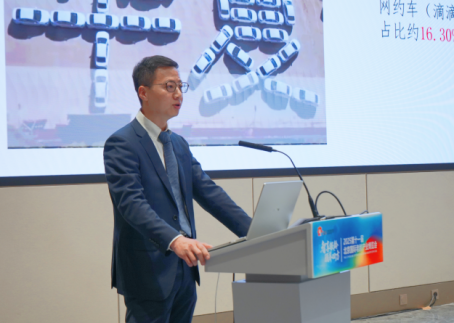
Hosted by the “Ten Thousand Enterprises and Thousand Schools” platform, the forum drew 230+ participants, including faculty from Central University of Finance and Economics, Shandong Agricultural University, and representatives from Huaxia Financial Leasing, Rongyuan Fisheries, and Ningxia Baofeng Energy. Industry data presented showed 87% of surveyed enterprises struggle with new hires lacking practical skills in cross-border risk control, international asset valuation, and compliance with standards like OFAC sanctions screening—gaps that extend employee adaptation periods to 6–12 months, a liability as Chinese leasing firms expand into Southeast Asia, Europe, and North America.
Zhang Sheng, with 15 years leading 120+ projects (total investment ≥ RMB 50 billion, including a $1.2B FLNG cross-border leasing deal), unveiled a “three-core capabilities + dual-track linkage” framework tailored for global competitiveness:
1.Global Practical Skills: Integrates 5 industry standards he drafted (e.g., cross-border shipping leasing risk control specs aligned with IMO 2025 regulations) and 20 proprietary systems—including a multilingual vessel valuation tool and cross-border exchange rate hedging simulator—into coursework. Central University of Finance and Economics will adopt the materials in 2025, with modules on U.S. CCPA data privacy and EU GDPR compliance.
2.Dual-Track Global Collaboration: Enterprises send executives with cross-border experience to teach 4 specialized courses/semester (e.g., “Green Leasing for U.S. IRA Tax Credits” “Southeast Asian Fisheries Leasing Compliance”); universities adapt real cross-border projects (e.g., Sino-European wind power leasing deals) into practice topics, with top students eligible for internships at overseas branches.
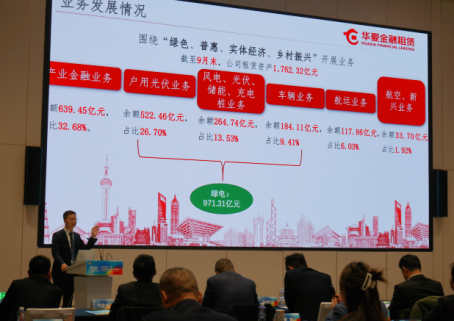
On-site, Zhang demonstrated his vessel valuation system—used by 14 international fisheries enterprises—with a simulation of assessing a $5M Alaskan fishing vessel, incorporating U.S. Coast Guard technical standards and NOAA fishing season data. The tool cuts student mastery of cross-border asset valuation to <3 months, vs. the industry average of 9 months. The platform offered 3-month free trials to 22 universities and 16 enterprises, including 3 with overseas operations.
Signed deals include a joint “Global Financial Leasing Training Base” between Central University of Finance and Economics and Huaxia Financial Leasing (launching Oct 2024, with a focus on U.S. and European market compliance), Shandong Agricultural University’s adoption of Zhang’s cross-border fisheries leasing system, and a custom training program for Ningxia Baofeng Energy’s green leasing expansion into Southeast Asia. Zhang also co-launched an industry initiative to align talent standards with ISO 20077 (international financial leasing norms) by end-2024.
Industry leaders highlighted the model’s global relevance:“Our New York office spent 8 months training a Chinese grad last year—they couldn’t navigate OFAC sanctions screening or U.S. tax-advantaged leasing structures,” said Li Wenjun, Vice President of Huaxia Financial Leasing’s Global Green Business Department. “Zhang’s system embeds real cross-border scenarios: interns simulate structuring a leasing deal for a Texas solar project, accounting for IRA tax credits and CCPA data rules. We tested 20 interns using it—15 drafted compliant plans in 1 month, cutting our overseas training costs by 40% and slashing onboarding time for global roles.”
Wang Dong, Dean of Shandong Agricultural University’s School of Finance, noted: “We used to teach cross-border fisheries leasing with textbooks, but students couldn’t value a vessel operating in international waters. With Zhang’s system, they input IMO technical specs, international insurance data, and regional fishing quotas to generate a valuation—last month, 80% of our seniors passed a practical assessment by a U.S.-based fisheries leasing firm, up from 35% before. Grads now speak the language of global clients.”
Chen Hui, CFO of Rongyuan Fisheries (with operations in Mauritania and Peru), added: “We hired 3 grads from Zhang’s pilot program. One restructured our Peruvian tuna vessel leasing deals to comply with local tax laws and U.S. import regulations, saving us $200,000 in annual compliance costs. This model doesn’t just teach skills—it trains talent who can bridge Chinese leasing expertise with global regulatory and market needs.”
Industry insiders project the model will boost the quality of globally competent talent by 35%, supporting Chinese financial leasing firms’ expansion into high-growth markets. Zhang plans to expand the program via salons in Qingdao and Yinchuan later this year, with a focus on integrating more North American and European regulatory scenarios.
Media Contact
By MICHAEL R. SISAK Reporter