

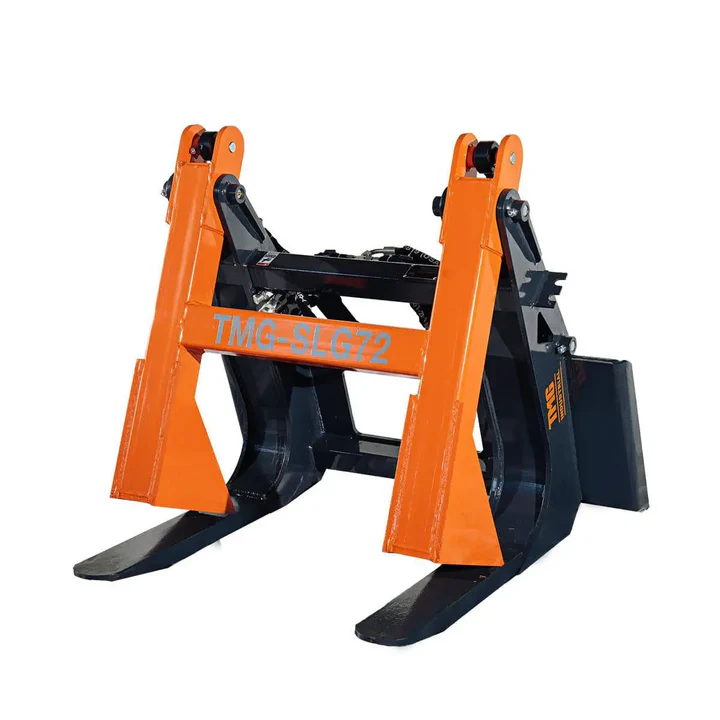
Industrial facilities, construction sites, and logistics yards frequently handle irregular materials such as logs, brush, demolition debris, and scrap. Manual handling of these items is slow and exposes workers to injury. A skid steer log grapple attachment transforms a standard skid steer loader into a dedicated material handling machine. This article examines the technical aspects, safety considerations, and operational benefits of using a 46‑inch log grapple, providing guidance for warehouse managers, equipment operators, and procurement professionals in Canada.
Overview of Log Grapple Attachments
A log grapple is a hydraulically actuated attachment that mounts to the front of a skid steer loader via a universal quick‑attach plate. It consists of two opposing jaws (grapples) that close around logs, brush, or other bulky items. The design allows the operator to grasp, lift, and transport materials without leaving the cab. Common industrial applications include:
- Loading and unloading logs at sawmills or lumber yards.
- Clearing land of trees and brush before construction.
- Handling scrap metal or demolition debris in recycling centres.
- Moving large pipes or culverts in infrastructure projects.
- Feeding wood chippers or grinders with bulky vegetation.
The 46‑inch width is well-suited for compact skid steers, offering a balance between maneuverability and carrying capacity.
Efficiency, Safety, and Productivity
Mechanizing material handling with a grapple attachment yields significant gains. One operator can accomplish in minutes what would take a ground crew hours. This reduces labour costs and accelerates project timelines. From a safety perspective, keeping workers out of the direct path of moving materials eliminates many common causes of injury, such as pinch points and falling objects. The grapple also allows precise placement of loads, reducing damage to surrounding structures or equipment.
Technical Foundations and Capability Considerations
The 46″ Skid Steer Log Grapple Attachment is engineered to handle demanding industrial tasks. Key specifications define its capabilities and compatibility:
- Width: 46 inches – suitable for navigating tight spaces while carrying substantial loads.
- Hydraulic pressure: Rated for 3000 pounds per square inch, matching standard skid steer auxiliary hydraulics.
- Grapple opening: 36 inches – allows grasping of large diameter logs or bundles.
- Grapple capacity: 6400 pounds – the maximum safe load the attachment can hold, but the carrier machine’s lift capacity may be the limiting factor.
- Mounting system: Universal skid steer quick attach (flat face) for easy changeover.
The grapple arms are typically constructed of high‑strength steel with hardened pivot points to withstand repeated shock loads. Hydraulic cylinders are protected within the frame to minimize damage during operation.
Hydraulic System Requirements
To operate the grapple, the skid steer must have auxiliary hydraulic plumbing and a control valve (usually a toggle switch or foot pedal). Flow and pressure must meet the attachment’s requirements; insufficient pressure results in weak gripping force, while excessive flow can damage seals. Most modern skid steers provide adequate flow for grapples of this size.
Factors Affecting Performance and Safety
Optimal performance depends on several variables that operators and managers should monitor:
- Machine size and weight: A lightweight skid steer may become unstable when lifting near capacity. Counterweights or ballast may be required.
- Load distribution: Off‑center loads can cause side strain on the grapple arms and increase tipping risk.
- Ground conditions: Soft or uneven terrain reduces stability; operators should avoid slopes when carrying heavy logs.
- Maintenance: Worn pins, loose bolts, or leaking hydraulic cylinders compromise gripping force and safety.
- Operator experience: Skilled operators achieve smoother handling and avoid sudden stops that could eject material.
Safety Considerations and Best Practices
Using a log grapple safely requires adherence to established protocols:
- Inspect the attachment before each use: check for cracks, loose fasteners, hydraulic leaks, and worn cutting edges (if equipped with grapple rake).
- Verify that the quick‑attach mechanism is fully engaged and locked.
- Never exceed the rated capacity of the grapple or the skid steer’s lift capacity.
- Keep bystanders at a safe distance – a dropped log can roll or bounce unpredictably.
- Avoid carrying loads over people or equipment.
- When traveling with a load, keep the grapple low to maintain stability.
- Use the grapple only for intended materials; do not use it to push or dig, as this can overstress the frame.
- Release hydraulic pressure before disconnecting hoses, and cap fittings to prevent contamination.
Equipment Types and Related Attachments
While a dedicated log grapple is optimized for cylindrical objects, other grapple styles may be better suited for mixed debris:
- Root grapple/rake grapple: Features tines that can comb through material while grabbing; useful for land clearing with rocks and roots.
- Orange peel grapple: Multiple curved tines that close like a flower; excellent for handling irregular scrap.
- Clamshell bucket: Enclosed bucket for loose materials like mulch or waste.
Quick-attach systems (universal skid steer) allow rapid swapping between these tools. Additional accessories include grapple guards to protect hydraulic lines and bolt‑on cutting edges for light brush work.
Advantages and Limitations
Advantages:
- Increases productivity by combining lifting, carrying, and placing in one operation.
- Reduces manual labour and associated injury risks.
- Versatile for various materials: logs, brush, pallets, scrap, demolition debris.
- Compact width (46 inches) allows access to confined areas.
- Universal mount fits most skid steer loaders.
Limitations:
- Requires a skid steer with auxiliary hydraulics; older machines may lack this.
- Not designed for precision tasks like grading or digging.
- Adds weight to the front, affecting machine balance.
- Can cause ground disturbance if dragged; not ideal for finished surfaces.
- Operator visibility may be partially obstructed by the load.
Real‑World Example: Forestry Mulching Operation
A vegetation management contractor in British Columbia was tasked with clearing a 10‑acre site for a new industrial park. The terrain included mixed forest with trees up to 12 inches in diameter. Using a 75‑horsepower skid steer equipped with a 46‑inch log grapple and a mulching head, the crew worked efficiently. The grapple gathered felled trees and debris, feeding them into the mulcher or stacking them for later processing. The operator reported that the grapple’s 36‑inch opening easily handled the largest logs, and the 6400‑pound capacity meant fewer trips to the pile. The job was completed two days ahead of schedule, with zero safety incidents.
Conclusion and Future Trends
The 46‑inch skid steer log grapple attachment is a valuable tool for any industrial operation that handles bulky, irregular materials. By matching the attachment’s specifications to the carrier machine and following safe operating practices, facilities can achieve significant gains in efficiency and worker safety. Looking ahead, we see trends toward integrated load‑sensing hydraulics that optimize gripping force automatically, as well as telematics that monitor attachment usage and maintenance needs. For procurement professionals, investing in a durable, well‑designed grapple such as the 46‑inch model ensures long‑term versatility and return on investment.