

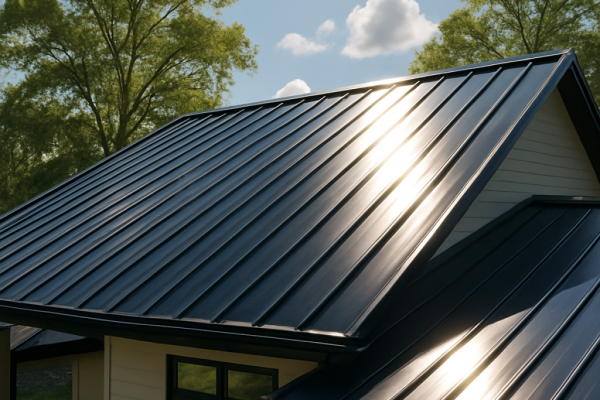
When it comes to home improvements, few decisions have as much long-term impact on your comfort and energy bills as your choice of roofing material and color. If you’re considering a metal roof — one of the most durable and popular roofing options available today — you’ve probably wondered: how much extra heat does a darker color metal roof absorb compared to a lighter one?
It’s a fair question, and one that can directly influence your monthly utility costs, indoor comfort, and even the lifespan of your roofing system. In this comprehensive guide, we’ll break down everything you need to know about darker metal roofs, heat absorption, energy efficiency, and how to make the smartest choice for your home.
Why Metal Roofing Is Trending in Home Improvements
Metal roofing has experienced a massive surge in popularity over the past decade. According to industry data, the metal roofing market has been growing steadily, with homeowners increasingly choosing metal over traditional asphalt shingles. The reasons are clear:
- Longevity: Metal roofs can last 40 to 70 years, compared to 15 to 30 years for asphalt shingles.
- Durability: They resist cracking, shrinking, and eroding, and can withstand wind gusts up to 140 mph.
- Energy efficiency: Metal roofs reflect solar radiant heat, which can reduce cooling costs by 10 to 25 percent.
- Eco-friendliness: Most metal roofing contains 25 to 95 percent recycled content and is 100 percent recyclable at the end of its life.
- Aesthetic variety: Metal roofs come in a wide range of colors, styles, and finishes, allowing homeowners to customize their home’s appearance.
But with all those color choices comes an important consideration — how does roof color affect heat absorption, and how much extra heat are you inviting into your home by choosing a darker shade?
Understanding How Roof Color Affects Heat Absorption
To understand how much extra heat a darker metal roof generates, you need to understand the basic science of solar energy and heat transfer.
Solar reflectance (also called albedo) measures how much sunlight a surface reflects. A perfectly white surface has a solar reflectance of 1.0 (reflects 100 percent of sunlight), while a perfectly black surface has a solar reflectance of 0.0 (absorbs 100 percent of sunlight).
Thermal emittance measures how efficiently a surface releases absorbed heat. A high thermal emittance means the roof radiates heat away quickly rather than transferring it into your home.
Together, these two properties determine a roof’s Solar Reflectance Index (SRI), which is the standard measurement used to compare how hot different roofing surfaces get in the sun.
Here’s where color makes a dramatic difference:
- Light-colored metal roofs (white, light gray, light tan) typically have a solar reflectance of 0.50 to 0.70, meaning they reflect 50 to 70 percent of solar energy.
- Medium-colored metal roofs (medium blue, green, terracotta) typically have a solar reflectance of 0.30 to 0.50.
- Dark-colored metal roofs (black, dark brown, dark charcoal, dark bronze) typically have a solar reflectance of 0.05 to 0.30, meaning they absorb 70 to 95 percent of solar energy.
This means a dark metal roof can absorb two to three times more solar energy than a light-colored metal roof on the same sunny day.
How Much Hotter Does a Dark Metal Roof Actually Get?
Let’s put real numbers to this. On a sunny summer day with an ambient air temperature of 90°F (32°C), roof surface temperatures vary dramatically based on color:
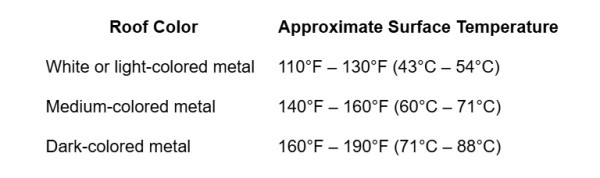
That’s a potential difference of 50 to 60 degrees Fahrenheit between a white and a dark metal roof surface on the same day. In extreme conditions in southern climates, dark roofs have been recorded reaching temperatures above 190°F.
So how much extra heat does this translate to inside your home?
Studies conducted by the Oak Ridge National Laboratory (ORNL) and the Florida Solar Energy Center (FSEC) have shown that a dark-colored roof can increase attic temperatures by 20 to 40 degrees Fahrenheit compared to a light-colored reflective roof. Without proper insulation and ventilation, this excess heat transfers into your living spaces, forcing your air conditioning system to work harder and longer.
In practical terms, homeowners with dark metal roofs in warm climates can expect to pay 10 to 25 percent more in cooling costs compared to those with lighter-colored metal roofs. For an average home spending $200 per month on cooling during summer, that could mean an additional $20 to $50 per month — or $100 to $300+ extra per cooling season.
The Role of Cool Roof Coatings and Technology
Here’s some good news if you love the look of a dark metal roof: modern cool roof technology has significantly narrowed the performance gap between light and dark metal roofs.
Cool roof coatings and pigments are specially engineered to reflect infrared radiation (the part of sunlight that generates heat) while still absorbing visible light (which determines the color you see). This means you can have a dark-colored roof that reflects significantly more heat than a conventional dark roof.
Cool-coated dark metal roofs can achieve solar reflectance values of 0.25 to 0.40, compared to just 0.05 to 0.15 for conventional dark paints. That’s a meaningful improvement that can reduce surface temperatures by 20 to 40 degrees Fahrenheit compared to a standard dark roof.
Major metal roofing manufacturers now offer cool roof-rated colors across a wide spectrum, including dark shades. When shopping for a dark metal roof, look for products that meet the following standards:
- ENERGY STAR® rated: The EPA requires metal roofs to have an initial solar reflectance of at least 0.25 and a three-year aged reflectance of at least 0.15.
- CRRC rated: The Cool Roof Rating Council tests and lists the solar reflectance and thermal emittance of roofing products.
- Title 24 compliant: In California, building codes require minimum reflectance values that many cool-coated dark roofs can meet.
Factors Beyond Color That Influence Metal Roof Heat
While color is one of the most significant factors affecting heat absorption, it’s not the only one. Several other variables play important roles in determining how much heat a metal roof transfers into your home.
1. Insulation Quality
Proper attic insulation acts as a thermal barrier between your roof and your living space. Even with a dark metal roof, high-quality insulation with an R-value of R-38 to R-60 (depending on your climate zone) can dramatically reduce heat transfer. Upgrading your insulation is one of the most cost-effective ways to offset the heat impact of a darker roof.
2. Ventilation
A well-ventilated attic allows hot air to escape before it can radiate into your home. Ridge vents, soffit vents, and powered attic ventilators create airflow that can reduce attic temperatures by 20 to 30 degrees, regardless of roof color.
3. Radiant Barrier
Installing a radiant barrier — a reflective foil material — in your attic can block up to 97 percent of radiant heat transfer from the roof. This is particularly effective with dark roofs and can reduce cooling costs by an additional 5 to 10 percent.
4. Roof Profile and Air Gap
One often-overlooked advantage of metal roofing is the air gap created by certain roof profiles. Standing seam, corrugated, and tile-profile metal roofs create a natural air space between the metal panels and the roof deck. This air gap acts as an additional insulating layer and allows some heat to dissipate before reaching the structure below. Studies suggest this air gap can reduce heat transfer by 25 to 45 percent compared to a flat, directly-applied roofing material.
5. Geographic Location and Climate
Where you live matters enormously. In hot southern climates (Texas, Florida, Arizona, Southern California), the heat difference between a dark and light roof is maximized because of intense, prolonged sun exposure. In cooler northern climates (Minnesota, Wisconsin, Maine), the equation shifts — a darker roof can actually be beneficial in winter because it absorbs more solar heat, helping to melt snow and reduce heating costs.
6. Roof Orientation and Shading
A south-facing or west-facing roof receives significantly more direct sunlight than a north-facing one. Trees and other structures that shade your roof can also reduce heat absorption. If your home is heavily shaded, the color of your metal roof becomes less of a factor in heat gain.
Dark vs. Light Metal Roof: A Climate-by-Climate Breakdown
Choosing between a dark and light metal roof depends heavily on where you live. Here’s a practical breakdown:
Hot Climates (Cooling-Dominated Zones) Locations like Phoenix, Houston, Miami, and Las Vegas experience intense, prolonged heat. In these areas:
- A light-colored metal roof is generally the most energy-efficient choice.
- A dark roof can increase annual cooling costs by $150 to $600+ depending on home size and insulation.
- If you choose a dark color, invest in cool roof coatings, enhanced insulation, and radiant barriers.
Cold Climates (Heating-Dominated Zones) Locations like Minneapolis, Chicago, Buffalo, and Anchorage have long, cold winters. In these areas:
- A darker metal roof can provide a modest benefit by absorbing solar heat and reducing heating demand.
- The heating cost savings from a dark roof are typically $50 to $200 per year, though this varies widely.
- However, this benefit is partially offset by the fact that winter days are shorter and snow-covered roofs reflect sunlight regardless of underlying color.
Mixed Climates (Both Heating and Cooling) Locations like Nashville, Charlotte, St. Louis, and Portland experience significant heating and cooling seasons. In these areas:
- The choice is more nuanced and depends on your specific home design, insulation, and personal priorities.
- Medium-toned metal roofs with cool coatings often provide the best year-round balance.
- Energy modeling software can help you calculate the optimal color for your specific situation.
How to Offset Heat Gain From a Dark Metal Roof
If your heart is set on a dark metal roof for aesthetic reasons, there are several proven strategies to minimize the heat penalty:
Upgrade Attic Insulation Increasing your attic insulation to R-49 or higher creates a thick thermal barrier. Spray foam insulation is particularly effective because it seals air leaks while insulating. This single improvement can reduce heat transfer from a dark roof by 50 percent or more.
Install a Radiant Barrier Radiant barriers installed on the underside of the roof rafters reflect up to 97 percent of radiant heat. Combined with proper insulation, this can make a dark metal roof perform nearly as well as a light one in terms of interior heat gain.
Ensure Proper Ventilation Adding ridge and soffit vents, or upgrading to a solar-powered attic fan, allows trapped hot air to escape before it heats your living space.
Choose Cool Roof-Rated Dark Colors As mentioned earlier, cool pigment technology allows dark colors to reflect significantly more infrared radiation. Always check the CRRC rating or ENERGY STAR certification of the specific color you’re considering.
Consider Above-Sheathing Ventilation Some metal roofing installation methods create a ventilated air space above the roof deck using battens or furring strips. This above-sheathing ventilation channel significantly reduces heat transfer and is highly recommended for dark roofs in hot climates.
The Financial Perspective: ROI of Roof Color Choices
Let’s look at the financial impact of choosing a dark versus light metal roof over the typical lifespan of a metal roofing system.
Scenario: 2,000-square-foot home in a warm climate (e.g., Dallas, TX)
- Average annual cooling cost increase with a dark roof vs. light roof: $200 to $400
- Over a 50-year roof lifespan: $10,000 to $20,000 in additional cooling costs
- Cost of cool roof coating upgrade: $500 to $1,500 at installation
- Cost of insulation and radiant barrier upgrades: $2,000 to $5,000
Even accounting for inflation and energy price fluctuations, investing $3,000 to $6,000 in heat mitigation measures for a dark roof can save you $10,000+ over the life of the roof while letting you enjoy the color you prefer.
For homeowners in cooler climates, the calculus is different. The heating benefit of a dark roof partially or fully offsets the cooling penalty, and the net annual cost difference may be negligible — perhaps $50 to $100 per year in either direction.
Does Metal Roof Color Affect Home Resale Value?
Another important home improvement consideration is how your roof color affects your property value. Here are some key points:
- Curb appeal matters: The right color that complements your home’s architecture and neighborhood can boost curb appeal and resale value by 1 to 5 percent.
- Energy efficiency sells: Homes with documented energy-efficient features, including cool roofs, often sell faster and for higher prices.
- Dark roofs are popular: Despite the heat factor, dark-colored roofs (charcoal, dark gray, black, dark bronze) remain the most popular choices in many markets because of their timeless, elegant appearance.
- Buyer awareness is growing: More homebuyers are asking about energy efficiency, so having a dark roof paired with documented insulation and ventilation upgrades can be a strong selling point.
Best Dark Metal Roof Colors for Minimizing Heat
If you want the aesthetic appeal of a dark metal roof with minimal heat penalty, consider these options with cool roof coatings:
- Dark Bronze with cool pigment: Achieves solar reflectance of 0.30+ while maintaining a rich, dark appearance.
- Charcoal Gray with cool coating: Reflects up to 35 percent of solar energy, significantly better than conventional charcoal.
- Dark Green with infrared-reflective pigment: A classic look that can achieve surprisingly good thermal performance.
- Burnished Slate: A popular dark option that many manufacturers offer in cool roof-rated versions.
Avoid conventional flat-black or untreated matte-dark finishes, as these have the lowest solar reflectance values and absorb the most heat.
Final Verdict: How Much Extra Heat Does a Darker Metal Roof Really Add?
To summarize the key takeaways:
- A conventional dark metal roof can reach surface temperatures 50 to 60°F higher than a light-colored metal roof on a sunny day.
- This translates to 20 to 40°F higher attic temperatures and 10 to 25 percent higher cooling costs.
- Cool roof coatings can reduce this gap by 30 to 50 percent, making dark roofs more viable in warm climates.
- Proper insulation, ventilation, and radiant barriers can further offset heat gain, making the interior temperature difference between dark and light roofs minimal.
- In cold climates, a dark metal roof can provide modest heating benefits that offset the cooling penalty.
- The best approach is to choose a cool-rated dark color if you prefer darker aesthetics and invest in proper attic insulation and ventilation.
Your metal roof color is an important decision, but it’s just one piece of the energy efficiency puzzle. With today’s technology and proper home improvements, you can enjoy the dark, dramatic look you love without paying a steep price in comfort or energy costs.