

Late at night in Hongkou, Shanghai, the office screen of Tan Zhile, Chairman of Beijing Jingwei Yuntu Technology Co., Ltd., remains brightly lit. A silk sanitary napkin brand tops the charts in a Douyin live stream, Enshi bacon re-launches on a TV shopping channel, and group-buy orders for collagen powder in private domains surge past 1,000—three trending supply chains operating in seamless synergy behind a single “Jingwei Yuntu ERP Middle Office.” A decade-deep industry veteran, Tan has reshaped the fundamental logic of fintech and equity investment through her dual-driver strategy of “cognition + capital,” scaling from a billion-yuan GMV to a trillion-yuan ecosystem blueprint.
Cognitive Foundation: Forging an Industry “Navigation System” from 219 Cases
Beyond the impressive metrics—”10 vertical supply chains spanning beauty, healthcare, agricultural specialties, intangible cultural heritage, maternal and infant products, with over 12000 SKUs and cumulative GMV exceeding 1 billion yuan”—lies Tan’s team’s meticulous deconstruction of the industry, and logistics parameter has been “granularized” into computable data tags, ultimately converging into the transformative “Industrial Cognition Intensity (ICI)” quantitative system.
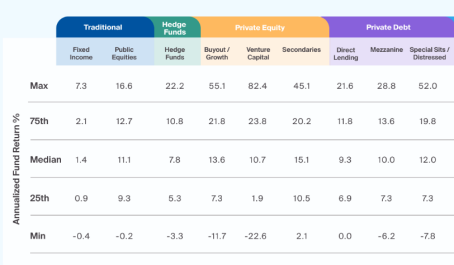
Born from a profound understanding of industry pain points, this system required five years of intensive research. Tan’s team analyzed 219 domestic and international fintech project cases across 12 niche sectors from 2017 to 2022, distilling three core dimensions—”policy comprehension (40%), technical foresight (35%), and resource integration (25%)”—encompassing 7 primary indicators and 35 secondary indicators within a 7-point evaluation framework. Empirical data confirms that when the ICI score reaches ≥4.2, equity investment projects see an average 3.8-percentage-point increase in IRR and a 42% direct reduction in failure rates, establishing it as a “navigation system” for precise capital decision-making.
“The breakthrough of the ICI model lies in its ability to transform abstract industrial cognition into retraceable, verifiable quantitative indicators, solving the long-standing industry dilemma of ‘ambiguous cognition,'” noted Lu Mingyuan, Chief Professor at the Huaxia Industrial Investment Research Institute and Director of the Fintech Research Center. “This innovation elevates industrial cognition from ‘personal experience’ to a ‘universal industry tool,’ setting a paradigm for enhancing resource allocation efficiency across the sector.”
Dual-Driver Synergy: Precise Capital Empowerment, Routine Valuation Doubling
In 2022, following Tan’s strategic restructuring of Beijing Jingwei Yuntu with a 95% controlling stake, the “cognition + capital” model entered a phase of large-scale expansion. On the supply chain front, pre-emptive cognitive insights enabled targeted capital deployment: In the Enshi agricultural specialty supply chain project, the ICI model identified core pain points—”poor quality control from fragmented production, lack of standardized packaging, and limited access to high-end channels.” Jingwei Yuntu injected 300 million yuan in targeted capital to build standardized production workshops and quality control systems, connecting the industrial belt to 120 offline supermarkets, over 20 leading e-commerce platforms, and live-streaming institutions, while introducing a “field-to-table” traceability system. The results were transformative: local bacon ex-factory prices rose by 40%, farmers’ annual income increased by over 30,000 yuan, and the industrial belt’s annual sales soared from 80 million yuan to 230 million yuan, achieving a triple win of “cognitive breakthrough + capital appreciation + social value.”
On the investment front, the operation of the inaugural 320 million US dollar “Industrial Cognition No.1 Fund” maximized the model’s advantages. Boasting LP investors including the Yangtze River Delta Emerging Industry Guidance Fund, a Southeast Asian sovereign fund FoF, and three A-share consumer leaders, the fund’s agreement enshrined “three cognitive iron rules”: projects with an ICI score below 4.2 are directly rejected; GP carry is reduced by 20% if post-investment resource matching rates (measured by API calls) fall below 80%; and a further 15% deduction applies if ICI scores decline upon exit. Under these rigorous standards, post-investment projects delivered exceptional results: The silk sanitary napkin brand “Sifubao” scored 4.6 in its Series A round, with the system completing supply chain and traffic resource matching in 0.3 seconds—driving sales from zero to 58 million yuan in six months and doubling its valuation by 2.4 times. Enshi’s “Bachu Bacon” pre-made meal project secured ready-to-eat certification in 45 days through third-party laboratory resources integrated via the cognitive system, entering 184 community group-buy channels and increasing its pre-Series A valuation by 180%.
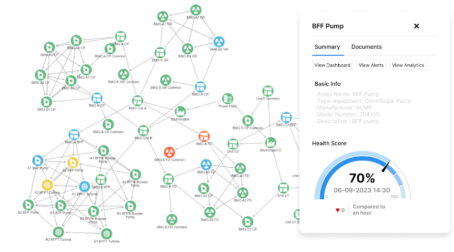
Simultaneously, Tan’s team encapsulated core cognitive tools into 278 API modules, developing the “Jingwei Cloud” middle office to form a secondary growth curve of “software + data + resources.” To date, the system has signed SaaS service agreements with 8 leading institutions. Adopting a pay-per-call pricing model with a minimum rate of 0.12 yuan per API call, the platform achieves a gross profit margin of 78%. As of October 2024, cumulative calls have exceeded 120 million, directly driving over 20 billion yuan in related investments and establishing it as China’s first profitably scaled industrial cognition SaaS platform.
Ecosystem Expansion: Standard-Setting Reshaping Industry Rules
Tan’s cognitive system has evolved into an industry hard standard. Currently, the ICI indicator has been formally integrated into the due diligence templates of several leading institutions as a core quantitative criterion for project screening. The “Industrial Cognition Empowerment Program” initiated by Tan, in collaboration with over 20 industry experts, has provided practical training to nearly 100 investment institutions. Participant feedback indicates an average 30% reduction in investment decision cycles and a 25% drop in post-investment risk incidence. One Zhejiang-based supply chain enterprise avoided two high-risk projects through the system, saving 12 million yuan in ineffective investments.
The model has also demonstrated strong adaptability in cross-border scenarios. In a Vietnamese beauty OEM factory project, Tan’s team optimized the ICI model by adding “cross-border policy adaptability” and “localized operation capability” sub-dimensions, accurately predicting raw material import approval risks. The team assisted the enterprise in establishing fast-track access with Vietnamese quarantine authorities and implementing an intelligent logistics system, boosting capacity utilization from 60% to 92% within six months—setting a benchmark for cross-border investments in Southeast Asia. At the 5th Digital Fintech Conference and the 1st “BRICS Plus” Digital Trade Cooperation Exchange Conference, the ICI system matched 184 transaction records in real time through supply chain data interfaces, cutting risk control approval time from 2 days to half a day and improving efficiency by 50%, earning high recognition from international experts.
“Capital is fuel, and industrial cognition is the steering wheel,” Tan emphasized. She is advancing a 100 million yuan upgrade plan for the “Jingwei Cloud” middle office, expanding the number of interfaces to 1,000 and adding indicators for carbon footprint, ESG, and gender equality to cover more niche sectors. Additionally, she is collaborating with the Huaxia Industrial Investment Research Institute and the National Equity Investment Association to standardize industrial cognition criteria, aiming to establish “industrial cognition intensity” as a universal evaluation indicator for the equity investment industry.
Professor Lu Mingyuan predicts that Tan’s “cognition + capital” model is driving the industry’s transformation from “experience-driven” to “indicator-driven.” Over the next three years, it will reshape the ecological landscape of fintech and equity investment, channeling more efficient capital into the real economy. This industry paradigm pioneered by a Chinese entrepreneur, he adds, also holds significant potential for global export.
Media Contact
Company Name: American Daily Newswire
Contact Person: Robert Davis
Country: United States
Website: https://www.adnewswire.com/