

Digital transformation is no longer exclusive to large enterprises, yet for most small and medium-sized enterprises (SMEs) worldwide, the triple predicament of “high costs, high barriers, and low adaptability” remains a formidable obstacle. According to a 2025 survey by the U.S. Small Business Administration (SBA), 62% of American SMEs abandon digital transformation plans due to annual investments in digital tools exceeding $15,000. Simultaneously, a report from the China Academy of Information and Communications Technology (CAICT) reveals that the digital transformation failure rate for domestic SMEs stands as high as 45%. However, the “SMB Brand Lightweight Transformation Toolkit” (Software Copyright No.: 2025SA0126862), developed by Lu Bo, a leading expert in brand marketing informatization, has emerged as a pragmatic solution to this industry pain point. With its innovative “no-code operation + modular subscription” model, the toolkit now serves 326 SMEs across 5 countries—China, the United States, Singapore, Australia, and Canada—slashing digital transformation costs by 50% and reducing deployment cycles from the traditional 3 months to just 30 minutes.
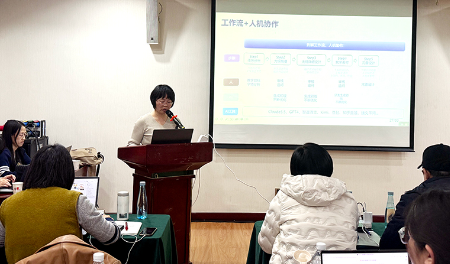
As the founder of Yushu (Dalian) Technology Development Co., Ltd. and CEO of LB Marketing Tech in the United States, Lu Bo has over 15 years of deep expertise in brand marketing informatization. Her team has long tracked the real challenges faced by SMEs in their digital journey. “SMEs have clear core needs: they don’t require complex customized functions, but tools that are ‘easy to use, cost-effective, and actionable,'” Lu Bo stated in an exclusive interview with industry media. She emphasized that the complex operations, exorbitant costs, and lengthy deployment cycles of traditional marketing informatization systems are severely misaligned with the human and financial resources of SMEs—this is the core motivation behind her focus on developing lightweight tools.
The toolkit’s key breakthrough lies in balancing “usability” and “adaptability.” Unlike traditional systems that demand professional IT personnel for operation, Lu Bo’s team innovatively adopted a “no-code visual drag-and-drop” design, embedded with 108 templates across 15 niche industries, including retail, manufacturing, services, foreign trade, and cross-border e-commerce. Without any programming foundation, enterprise employees can complete core digital functions such as official website construction, digital exhibition hall deployment, customer portrait analysis, and marketing compliance self-inspection through template selection and parameter adjustment. More critically, the toolkit integrates Lu Bo’s pioneering “Industry Characteristic Coefficient” algorithm, which automatically optimizes functional modules based on the business logic of different industries—for example, adapting multi-language one-click switching and cross-border logistics data linkage for foreign trade enterprises, and enhancing supply chain marketing data tracking modules for manufacturing enterprises, thus avoiding functional redundancy caused by the one-size-fits-all approach of traditional tools.
Cost control is a decisive factor for SMEs choosing this toolkit. Adopting a “pay-as-you-go” modular subscription model, the annual fee starts as low as RMB 3,000 (approximately $$420), only 1/10 of the cost of traditional customized systems. The person in charge of “Global Craft Hub,” a cross-border e-commerce enterprise in California, USA, commented: “Previously, we consulted three mainstream digital tools, with the lowest annual fee exceeding$$12,000, not to mention the additional cost of hiring technical personnel for maintenance. With Lu Bo’s SMB Toolkit, we completed official website construction, multi-platform content distribution, and customer repurchase management for just $400 per year. Within six months, our brand exposure costs decreased by 38%, and online orders increased by 25%.” A small building materials enterprise in Dalian, China, provided a more compelling case: using the toolkit, it completed the deployment of a digital exhibition hall in only 25 minutes, saving 95% of the time and 92% of the cost compared to traditional development methods.
Compliance design has endowed the toolkit with cross-regional adaptability. Lu Bo’s team built a real-time compliance self-inspection module tailored to the regulatory requirements of different countries and regions, such as the U.S. CCPA, EU GDPR, and China’s Data Security Law. This module can automatically scan for compliance risks in marketing content and data storage, helping SMEs avoid data security fines in cross-border operations. Currently, the toolkit has obtained compatibility certification from the U.S. Marketing Technology Association (MTA) and can seamlessly integrate with mainstream North American CRM platforms like Salesforce and HubSpot, further reducing the cross-system adaptation costs for SMEs.
As of March 2026, the toolkit boasts a customer renewal rate of 98%, far exceeding the industry average of 60%. Third-party calculations show that enterprises using the toolkit have shortened their average digital transformation cycle by 80%, increased marketing ROI by 32%, and collectively saved over RMB 120 million in digital investment. Additionally, the toolkit has been included in the “Recommended Toolkit for SME Digital Transformation” by China’s Ministry of Industry and Information Technology (MIIT) and listed as a “2025 Global SME Innovation Tool Case” by the U.S. National Small Business Association (NSBA).
“SMEs are the capillaries of the global economy, and digitalization should not be a barrier to their development,” said Zhao Qiang, Secretary-General of the Ten Thousand Enterprises and Thousand Schools Industry-Education Integration Promotion Association, in an interview. He noted that the core value of Lu Bo’s SMB Toolkit lies in breaking the inherent perception that “digital transformation equals high investment.” Its no-code architecture and industry-specific template design not only lower the technical threshold but also provide a replicable lightweight transformation path, particularly suitable for SMEs with limited resources. “From the perspective of practical application effects, this tool is not a simple accumulation of functions but precisely targets the core pain points of SMEs. Its successful implementation across 5 countries also proves the cross-regional adaptability of this model.”
Regarding the future iteration of the toolkit, Lu Bo has a clear plan: “We will continue to collect user feedback from enterprises in different industries and regions, focusing on expanding customized templates for vertical sectors such as U.S. manufacturing and Southeast Asian cross-border e-commerce. Meanwhile, we will upgrade our multi-language customer support services to enable more SMEs around the world to access cost-effective and efficient digital tools.” On the track of digital inclusion, this lightweight tool, rooted in practice and serving practice, is becoming a “pragmatic choice” for global SMEs embarking on digital transformation.
Media Contact
By MICHAEL R. SISAK Reporter