

From the frigid borders of the Scandinavian Peninsula to the industrial parks along the Mediterranean coast, the LMIR series thermal imaging equipment developed by Ma Xiang’s team has become a cornerstone of Europe’s security infrastructure. Boasting exceptional environmental adaptability and precise detection capabilities, this equipment not only addresses the unique security challenges posed by Europe’s diverse terrains and climates but also delivers standardized solutions for border patrols, industrial security, and emergency rescues through innovative “thermal imaging + laser ranging” fusion technology—revolutionizing local safety protection systems.
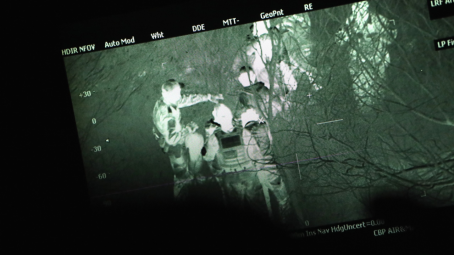
“In winter patrols along the Germany-Denmark border, sub-zero temperatures as low as -38℃ combined with coastal winds once caused lens fogging and detection failures in many security devices. However, the LMIR equipment operated stably for 72 consecutive hours without any performance degradation,” said Markus Weber, partnership director at Germany’s Bresser GmbH, citing specific cases to validate the product’s reliability. He revealed that the collaboration between the two parties now covers three border control zones in northern Germany, with 250 deployed LM6F series units. Leveraging the high sensitivity of their 384×288 VOx sensors, these devices can detect moving targets up to 2.2 kilometers away in complete darkness, achieving a pedestrian recognition accuracy rate of 96%—a 30% improvement over the region’s previous equipment. “What’s more critical is its temperature measurement precision: in monitoring vehicle engine temperatures at border checkpoints, the equipment can accurately identify abnormal heat points exceeding 80℃ with an error margin of no more than ±1.5℃, successfully preventing three potential vehicle fires.”
The integrated “thermal imaging + laser ranging” technology pioneered by Ma Xiang has proven invaluable in border patrols in the French Alps. Characterized by steep slopes and dense forests, this rugged terrain once made precise target localization impossible for traditional devices. In contrast, the LMIR equipment, equipped with a 25mm F1.0 lens and a linked laser ranging module, can detect targets and output distance data within 0.3 seconds with an error of ≤±0.5 meters. “During a search and rescue mission last winter, patrol teams used this equipment to quickly locate three climbers trapped deep in the forest amid a blizzard, with a distance measurement error of only 0.3 meters—securing critical time for the rescue,” stated a captain of a French border patrol unit. He added that the technology has boosted patrol efficiency by 50% and increased nighttime rescue success rates by 40%.
In industrial security, the LMIR equipment’s scenario-specific adaptability shines equally. A chemical park in Germany’s Ruhr region has deployed 120 LM6P series units tailored to monitor temperatures of tanks, pipelines, and reactors. The equipment automatically switches temperature measurement modes, maintaining an accuracy of ±2% across a range of -20℃ to 500℃. “Through real-time monitoring data from the equipment, we detected two instances of local temperature anomalies caused by minor pipeline leaks, preventing potential explosions,” explained the park’s security director. The device’s customizable “abnormal temperature alarm” triggers audible and visualalerts and syncs data to the monitoring center within ≤0.4 seconds when thresholds are exceeded. Additionally, its IP67 waterproof and dustproof rating, combined with electromagnetic interference resistance, ensures 24/7 operation with an annual failure rate of less than 0.8%—even in the park’s dusty, high-humidity environment.
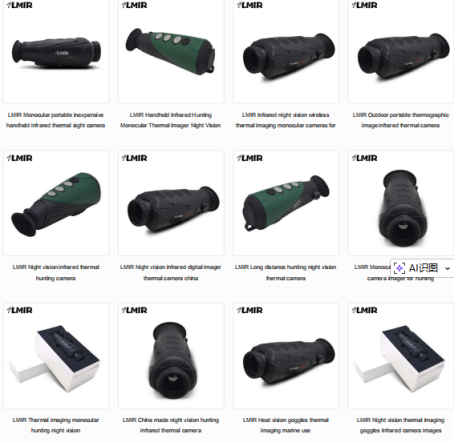
For London’s urban security upgrade project, Ma Xiang’s team optimized the equipment’s algorithm to handle complex road conditions and crowded areas. Using an improved three-frame difference method, the device effectively filters out interference from vehicle lights and building reflections, reducing the false positive rate for pedestrian recognition to below 0.5% in nighttime monitoring of transportation hubs. “The 30 units deployed at a subway station in East London have helped police address numerous security risks. Their precise target-locking capability provides reliable technical support for urban security,” said Oliver Carter, Technical Director at London Urban Security Solutions Ltd., the project’s partner. “The LMIR equipment’s WiFi live streaming function also allows security personnel to remotely view footage and adjust monitoring angles via mobile devices, significantly enhancing the flexibility of emergency responses. Compared to similar products, its anti-interference performance in complex light environments and stable data transmission stand out—making it our preferred choice for future urban security projects.”
From the extreme cold of border regions to the complex environments of industrial parks, and from crowded urban areas to rugged mountainous terrains, Ma Xiang’s thermal imaging equipment centers on technological innovation and deep adaptation to European security scenarios, delivering an end-to-end solution encompassing “precise detection, accurate ranging, and timely early warning.” Currently, the LMIR series, certified by the EU’s CE mark and Germany’s TÜV Rheinland, has been deployed in over 200 security projects across 12 European countries, with a total installation volume exceeding 12,000 units—earning recognition as a benchmark for high-performance equipment in Europe’s security sector. “We will continue to focus on the personalized needs of European security, further optimizing the equipment’s capabilities in intelligent linkage and AI recognition to drive the evolution of global security technology,” Ma Xiang stated. Through its practical application, his thermal imaging equipment is empowering Europe’s security ecosystem and setting a new standard for the iteration and implementation of global security solutions.
Media Contact
By MICHAEL R. SISAK Reporter