

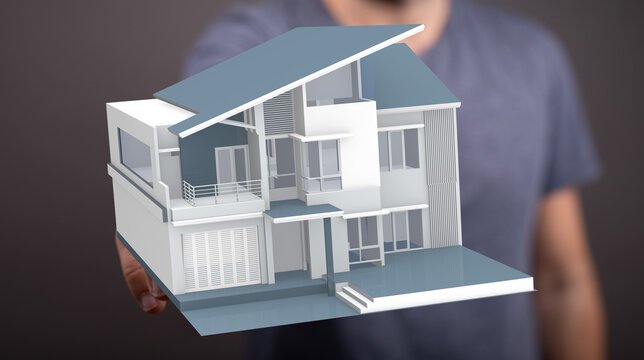
Building a home is likely the most significant financial and emotional investment you will ever make. It starts with a spark—a folder full of magazine clippings, a Pinterest board titled “Future Home,” or a specific plot of land with a view that demands a masterpiece. But as you move from the dreaming phase to the doing phase, the terminology can get murky.
You know you need a design, and you know you need someone to build it. But who does what? Does an architect build houses? Or do they just draw pretty pictures? And in the rapidly evolving world of house design, what trends are actually worth your money?
This guide peels back the layers of the construction industry, debunking myths and laying out the roadmap for turning a sketch into a sanctuary.
The Great Misconception: Does an Architect Build Houses?
Let’s address the elephant in the room immediately. You have hired an architect to design your dream home. Do you also expect them to show up with a hard hat, a hammer, and a crew to pour the concrete?
The short answer is no.
In the traditional sense, an architect does not build houses. They design them. However, to stop the explanation there would be a disservice to the complexity of the industry. To understand the nuance, we have to look at the distinct roles in the “Triangle of Construction.”
1. The Architect (The Composer)
The architect is the visionary and the author of the project. Their job is to translate your abstract needs (“I want lots of light” or “I need a kitchen for a chef”) into a tangible, buildable set of instructions. They deal in:
- Aesthetics: How the house looks.
- Functionality: How the floor plan flows.
- Safety & Code: Ensuring the building won’t collapse and meets local laws.
- Documentation: Creating the “Blueprints” (Construction Documents).
2. The General Contractor (The Conductor)
The General Contractor (GC) or Builder is the one who executes the design. They take the architect’s drawings and turn them into physical reality. They deal in:
- Logistics: Ordering materials and scheduling.
- Labor: Hiring subcontractors (plumbers, electricians, framers).
- Budget: Managing the cash flow for materials and labor.
3. The Exception: “Design-Build” Firms
Here is where the answer gets a little “yes-ish.” Over the last decade, a business model called Design-Build has surged in popularity. In a Design-Build firm, the architects and the builders work for the same company. If you hire a Design-Build firm, you are hiring one entity to both design and build the house. However, even within that company, the person drawing the plans is rarely the same person pouring the foundation.
The Architect’s Secret Weapon: Construction Administration
If an architect doesn’t build the house, do they just hand over the drawings and walk away? Absolutely not.
A crucial phase of house design is called Construction Administration (CA). This is where the architect acts as your agent on the job site. They don’t swing the hammer, but they police the people who do.
During construction, the architect visits the site to ensure the builder is following the plans exactly.
- Is the insulation the correct R-value?
- Is the window flashing installed correctly to prevent leaks?
- Did the framer put the wall in the right spot?
So, while the architect doesn’t build the house, they are the “Guardian of the Design,” ensuring the house is built correctly.
Trending Concepts in Modern House Design (2025-2026)
Now that we know who does the work, let’s talk about what is being designed. House design is moving away from the “McMansions” of the early 2000s toward intentional, sustainable, and health-focused living.
1. Biophilic Design: Bringing the Outside In
Biophilic design is no longer a buzzword; it’s a standard. It goes beyond just putting a plant in the corner.
- The Trend: Massive floor-to-ceiling glazing systems that dissolve the barrier between the living room and the backyard.
- The Benefit: Studies show that visual connection to nature lowers cortisol (stress) levels. Modern house design prioritizes natural light and ventilation over square footage.
2. The “Broken Plan” Living
For years, the “Open Concept” ruled supreme. However, the post-pandemic world realized that when everyone is home at once, open concept means noise.
- The Trend: “Broken Plan” design maintains sightlines (so the house feels big) but uses changes in floor level, partial walls, glass partitions, or shelving to create distinct “zones.”
- The Benefit: You get the feeling of togetherness without hearing the dishwasher while you’re trying to watch a movie.
3. The Rise of the ADU (Accessory Dwelling Unit)
With housing costs soaring and multigenerational living becoming common, house design now frequently includes an ADU.
- The Trend: Designing a ” Casita,” “Granny Flat,” or apartment above the garage during the initial build, rather than adding it later.
- The Benefit: It provides immediate space for aging parents or adult children, and eventual rental income for the homeowner.
4. Passive House and Net-Zero
Sustainability is shifting from “nice to have” to “code-mandated” in many regions.
- The Trend: Thick walls, triple-paned windows, and airtight construction. The goal is “Net-Zero,” meaning the house produces as much energy (via solar) as it consumes.
- The Benefit: While the upfront cost is higher, the utility bills are near zero, and the interior air quality is hospital-grade.
The Roadmap: How to Commission a House Design
If you are ready to start, don’t just call a builder and ask for a price. You can’t price what hasn’t been designed. Here is the professional workflow.
Phase 1: Programming (The Interview)
This is the “therapy session.” You and the architect sit down to discuss not just how many bedrooms you need, but how you live. Do you entertain? Do you cook? Do you hate mornings? This data drives the design.
Phase 2: Schematic Design (The Sketch)
The architect produces rough sketches, 3D massing models, and floor plan options. This is the collaborative phase where you move walls and play with ideas.
Phase 3: Design Development (The Details)
You select materials. The architect defines the skin of the house—brick, stucco, wood? The structural engineer gets involved to make sure the roof stays up.
Phase 4: Construction Documents (The Instruction Manual)
This is the heavy lifting. The architect produces a massive set of technical drawings (blueprints). These include electrical plans, plumbing schematics, and structural details. You cannot get a building permit without these.
Phase 5: Bidding and Permitting
You take the Construction Documents to General Contractors. Because the drawings are detailed, the contractors can give you an accurate price (Bid). Simultaneously, the drawings are submitted to the city for a permit.
Architect vs. Stock Plans: Which is Right for You?
Not every house design requires a licensed architect. Understanding your options can save you thousands.
Option A: Buying Stock Plans Online
- Cost: $1,000 – $3,000.
- Pros: Instant gratification; significantly cheaper.
- Cons: The plan was not designed for your lot. It might have windows facing a neighbor’s brick wall or lack proper solar orientation. You will still need a local engineer to approve the foundation.
Option B: Hiring a Draftsman/Designer
- Cost: $3,000 – $10,000 (or 3-5% of construction cost).
- Pros: Cheaper than an architect; good for simple structures.
- Cons: They generally lack the advanced training in structural engineering, complex design theory, and site analysis that architects have.
Option C: Hiring a Licensed Architect
- Cost: 8% – 15% of construction cost.
- Pros: A bespoke home tailored exactly to your lifestyle and the specific geography of your land. High resale value. Expert problem solving.
- Cons: The most expensive and time-consuming option.
The Financial Reality: Why Design Matters
Many homeowners try to save money by skipping the professional design phase, sketching something on a napkin, and handing it to a builder. This is often a false economy.
“Good design is expensive. Bad design is astronomical.”
A poor house design results in:
- Wasted Space: Hallways that are too long or rooms that are hard to furnish.
- Energy Waste: A house with windows facing the wrong way can increase cooling costs by 40%.
- Change Orders: If the plan isn’t clear, the builder will have to stop and ask, “What do you want here?” during construction. Every time this happens, the price goes up.
An architect optimizes the house design to reduce waste. They might save you 200 square feet of unnecessary hallway. If building costs are $250 per square foot, that architect just saved you $50,000 in construction costs—likely paying for their own fee.
Conclusion
So, does an architect build houses? No, they compose the symphony that the builder performs.
But in the world of modern house design, the architect is the linchpin that holds the project together. Whether you are looking for a biophilic sanctuary, a high-tech smart home, or a multi-generational compound, the journey begins with a pen and paper, not a shovel.
Your home is the backdrop of your life’s memories. Don’t leave its creation to chance. Invest in the design, understand the roles of your team, and build a reality that exceeds your dreams.
Frequently Asked Questions (FAQs)
1. Does an architect build houses or just design them?
An architect generally designs houses. They create the technical drawings, floor plans, and specifications. The physical construction is performed by a General Contractor (Builder). However, “Design-Build” firms employ both architects and builders under one roof to offer a single point of contact for the client.
2. How much does it cost to hire an architect for house design?
Architectural fees vary, but they typically charge between 8% to 15% of the total construction cost for full services (design through construction supervision). Some architects charge hourly ($100-$300/hr) or a fixed fee per square foot ($5-$20/sq ft) for plans only.
3. Can I build a house without an architect?
Yes. In many jurisdictions, you can build a residential home using a draftsman, a home designer, or even by buying stock plans online. However, some municipalities require stamps from a licensed architect or structural engineer for permits, especially for homes over a certain square footage or in areas with complex zoning.
4. What is the difference between an architect and a customized home builder?
An architect works for you. Their goal is to protect your interests and design excellence. A custom home builder constructs the house. If you hire a builder first, they may use their in-house designer. This can be cheaper, but the design is often simplified to make it easier/cheaper for the builder to construct, rather than optimized for your lifestyle.
5. What are the most popular house design styles for 2026?
Current trending styles include Modern Farmhouse (evolving into “Barndominium”), Japandi (a mix of Japanese rustic and Scandinavian functionality), and Biophilic Modern (focusing on natural materials, glass, and greenery). The focus is shifting toward sustainable, energy-efficient, and “wellness-centric” designs.
6. Does an architect manage the construction site?
They do not manage the daily labor (that is the builder’s job), but they perform Construction Administration. This means they visit the site periodically to approve payments to the builder, answer technical questions, and ensure the builder is following the blueprints correctly.
7. How long does the house design process take?
The design process usually takes 3 to 6 months before construction begins. This includes the initial interviews, schematic design, revisions, and producing the final technical construction documents required for permits.
8. What is a “Design-Build” firm?
A Design-Build firm is a company that handles both the architectural design and the physical construction. You sign one contract. This method can be faster and reduces conflict between the designer and the builder, as they are on the same team.