

Source: Canva
The holiday season is all about showing people you care, and nothing says thoughtfulness like a gift made just for them. It’s not about the price tag-it’s about the personal touch that shows you really know and appreciate someone. Science backs this up: gifts tailored to the recipient create stronger emotional connections and longer-lasting memories.
When someone receives a present that feels custom-made, their brain responds differently than it does to generic gifts. Personalized touches trigger dopamine, spark empathy, and activate memory pathways in ways standard gifts simply can’t. That’s why even a small, thoughtful holiday gift can leave a lasting impression on both the giver and the receiver.
The Neuroscience of Receiving Personalized Christmas Gifts
Your brain plays favorites with gifts. Seriously. When you tear into something made specifically for you, completely different neural pathways fire up compared to opening yet another generic present.
Dopamine Release and Emotional Attachment
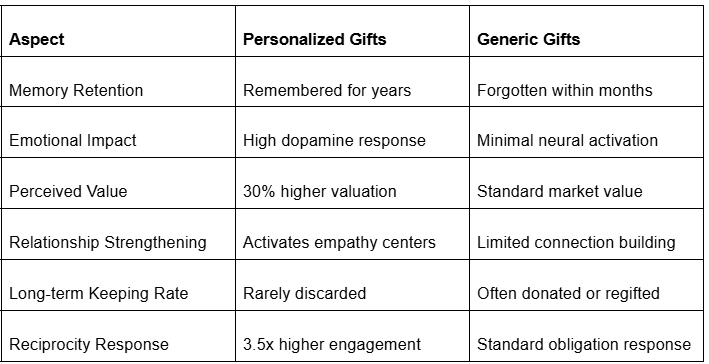
Giving and receiving gifts isn’t just a joyful tradition, it’s a brain-boosting experience. Studies reveal that personalized Christmas gifts can trigger a stronger dopamine release than generic ones, activating the brain’s reward center and deepening emotional connections. When a gift feels thoughtful and tangible, it forms a lasting memory imprint, creating a meaningful moment that strengthens bonds and makes the celebration truly unforgettable.
The Mirror Neuron Effect in Gift Reception
Mirror neurons are fascinating. They fire up when someone gives you a thoughtful present, letting you mentally step into the giver’s shoes. This is real neuroscience, not just poetry-your brain actually connects with their intentions. Hand someone a gift tailored to what they love, and those neurons help them feel every bit of effort you put in.
That’s why personalized gifts hit differently. People often have strong emotional reactions to customized presents because their brain literally processes thoughtfulness as care and love.
Five Psychological Principles That Make Meaningful Gifts Unforgettable
Some gifts get forgotten by New Year’s. Others become family legends. What separates them? These principles.
The Effort Heuristic: Time Investment Over Monetary Value
Here’s something cool: your brain cares more about effort than money. Research on meaningful gifts keeps showing the same pattern-people value your time investment way more than what you spent. Prospects are 3.5x more likely to respond after receiving a gift, which proves thoughtfulness wins.
A hand-painted ornament you spent hours on? Beats a pricey watch when someone sees the care you invested. That’s why custom gift ideas on a shoestring budget often crush expensive items emotionally-your brain recognizes heart, not dollars.
Identity Reinforcement Through Personalization
Unique holiday gifts work magic because they validate someone’s core identity. When you unwrap something that screams, “this is SO you,” it confirms your sense of self. Name personalization lights up self-referential processing in your medial prefrontal cortex. Case studies repeatedly show the gifts people treasure most make them think, “wow, they really know me.” It’s not about ego-it’s your brain hungry for recognition.
Memory Encoding Through Sensory Personalization
Multiple senses create bulletproof memory anchors. A custom photo album? You’re seeing and touching it, which makes forgetting basically impossible. Science connects personalization to long-term memory because your brain files sensory details alongside emotional context. That’s exactly why custom gift ideas that hit multiple senses-like engraved jewelry you see and feel-become permanent fixtures in memory.
Understanding Your Recipient: The Psychology of Gifting Framework
Knowing personalization works is step one. Actually applying it to real humans? That needs deeper understanding.
The Five Love Languages Applied to Gift Selection
Everyone receives love differently. The psychology of gifting overlaps beautifully with love languages. People whose primary language is “gifts” appreciate any present-but personalization makes it nuclear. “Quality time,” people? They go crazy for experience-based customization. Assessment tools exist to identify someone’s language. Match your personalization to their style and watch the magic happen.
Personality-Based Personalization Strategies
Myers-Briggs and Big Five traits actually predict gift preferences shockingly well. Introverts typically love intimate, private customization journals with meaningful inscriptions, that kind of thing. Extroverts light up for gifts they can show off or share socially. Matching unique holiday gifts to personality isn’t manipulative-it’s empathy in action. Detail-oriented folks appreciate intricate customization. Spontaneous personalities want creativity over perfection.
Age and Generation-Specific Customization Approaches
Gen Z wants tech-integrated personalization like QR codes that link to memory collections. Millennials dig sustainable, story-driven custom gift ideas aligned with their values. Gen X and Boomers respond powerfully to nostalgia-restored vintage photos in beautiful frames, for example. Kids need age-appropriate personalization that evolves with them. Understanding these generational differences stops you from giving gifts that you totally miss.
Emotional Value vs. Monetary Value: The True ROI of Personalized Christmas Gifts
Price tags are terrible predictors. Psychology proves emotional investment beats financial investment every single time.
The Endowment Effect in Customized Presents
Research on the endowment effect shows something interesting: people assign crazy high value to items that feel personally theirs. Personalization creates instant ownership psychology.
That’s why meaningful gifts survive every decluttering purge-they feel irreplaceable. Long-term studies show customized items stick around for decades, while generic gifts disappear within years. Your brain treats personalized presents as relationship extensions, not disposable objects.
Breaking the Price Expectation Trap
Customization completely reshapes how we perceive value. A small, thoughtful gift with a personal touch can have far more emotional impact than an expensive, generic item. Meaning matters far more than cost, and thoughtful, personalized gifts consistently create stronger connections and lasting impressions.
Comparison Table: Personalized vs. Generic Gifts
Common Questions About Personalized Holiday Gifting
Do personalized gifts actually make people happier than expensive generic gifts?
Absolutely-research consistently shows customized presents trigger way stronger dopamine responses and happiness that lasts. Brain imaging studies reveal personalized items light up reward centers more intensely than pricey generic alternatives, creating memories that stick around long after the unwrapping excitement fades.
How much personalization is too much when selecting custom Christmas gifts?
Personalization crosses the line when it feels creepy instead of thoughtful. Stay aware of comfort zones-inside jokes only you two share? Perfect. References to sensitive topics? Nope. Relationship stage matters big time: deep personalization fits close bonds, while surface customization works for newer connections.
Can last-minute personalized gifts still be meaningful?
One hundred percent. Thoughtfulness trumps lead time every time. Quick options like custom digital photo compilations or handwritten notes with specific memories carry serious emotional weight. The secret is ensuring personalization reflects genuine understanding, not just panic-adding someone’s name to random stuff.
