
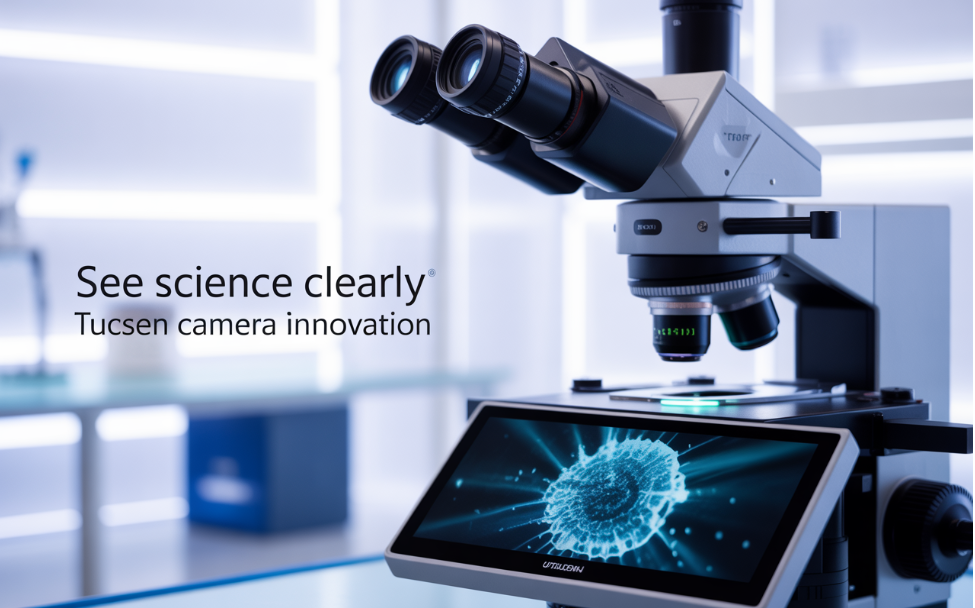
In the world of science and research, clear and accurate imaging is everything. That’s where Tucsen comes in — a company focused on making advanced microscopy accessible, reliable, and intelligent. Their powerful cameras bring tiny details into sharp focus, helping researchers, educators, and professionals see science in a whole new light.
Why Tucsen Cameras Stand Out
Tucsen is more than a camera maker — they specialize in microscopy-grade imaging. Their product lines include cooled sCMOS, USB 3.0 CMOS, HDMI cameras, and more. These are engineered for demanding environments like live-cell imaging, fluorescence, and metrology.
Some of their key strengths include:
High Sensitivity & Low Noise — Ideal for low-light or fluorescence applications, such as with their cooled FL series.
Flexible Data Interfaces — Offering HDMI, USB 3.0, USB 2.0, and even LAN connectivity across different models.
Intelligent Image Processing — Built-in color algorithms, live stitching, and depth fusion reduce the burden on your computer.
The Power of the Tucsen Microscopy Camera Line
Tucsen offers a wide range of camera models built for different microscopy needs: live imaging, high resolution, or even standalone use.
Here are some key Tucsen camera models that illustrate how they’re transforming microscopy:
TrueChrome 4K Pro: A powerful 4K HDMI + USB 3.0 camera with 3840×2160 resolution and 30 fps at HDMI or USB. Great for live imaging, tile stitching, and highly detailed observations.
TrueChrome PDAF: An autofocus HDMI camera using PDAF technology (like modern phones) for fast, precise focusing without needing a PC.
TrueChrome Metrics: A 1080p HDMI camera built for measurement work — includes tools for lines, angles, shapes, and precise micron-level measurements.
MIchrome 20: A 20MP USB 3.0 CMOS camera, ideal for high-resolution imaging, live stitching, and detailed scientific documentation.
GT 5.0: Compact, budget-friendly USB 2.0 CMOS camera. 5MP, 29 fps, and “graphics-accelerated” technology to improve frame rate.
GT 12: Higher-resolution version of the GT series, 12MP with 4000×3000 output and improved USB 2.0 performance.
FL 20BW: A cooled monochrome CMOS camera (20 MP) made for low-magnification fluorescence or dim imaging.
Dhyana 400BSI V3: A high-sensitivity sCMOS camera with 95% quantum efficiency, designed for advanced microscopy like super-resolution or light-sheet imaging.
HD Lite: 1080p HDMI microscope camera — no computer needed, supports SD card storage, and delivers reliable color reproduction.
How These Cameras Transform Microscopy
Stand-alone Operation — HDMI models like TrueChrome 4K Pro and Metrics let you use your microscope without a PC — connect a mouse, capture, measure, and save directly.
Enhanced Research Capabilities — With advanced USB 3.0 models like the MIchrome series, you can do live imaging, tile stitching, and real-time depth fusion without lag.
Low-Light Superiority — Cooled cameras (FL series) and high-sensitivity sCMOS (Dhyana) help capture weak signals clearly, even in low light.
Precision Measurements — TrueChrome Metrics supports real-time analysis with built-in measurement tools, eliminating the need for post-processing.
Affordable Versatility — The GT series offers economical solutions without sacrificing performance, perfect for teaching labs, industrial inspections, and entry-level research.
Real-World Impact: How Scientists & Educators Use Tuksen Cameras
Biology & Life Sciences: These cameras allow fast capture of live cells, time-lapse imaging, and precise measurements — especially with models like the TrueChrome 4K Pro or Dhyana sCMOS.
Education: In classrooms, HDMI cameras such as Metrics or HD Lite give students high-quality real-time viewing without needing complex setups.
Industrial / Quality Control: USB 2.0/3.0 CMOS like the GT or MIchrome lines are ideal for inspection, laboratory automation, and documenting fine detail in materials.
me Tucsen cameras ideal for live imaging experiments where things change over time.
Tips for Choosing the Right Camera
Here are some practical tips to pick the most suitable camera for your needs:
Interface First: Decide if you want HDMI (standalone) or USB (computer-connected).
Sensor Type: For low-light or fluorescence, go for cooled CMOS or sCMOS (e.g., FL series, Dhyana). For general microscopy, CMOS is often enough.
Resolution Needs: Use 4K or 20MP models for detailed work. For fast live imaging, lower-res models may suffice.
Software: Make use of Tucsen’s Mosaic software (or SDK) to stitch images, do EDF, or integrate into custom workflows.
Budget: Consider total cost — not just the camera, but also the computer, software, and mounting hardware.
Final Thoughts
With its diverse and powerful lineup, Tucsen is transforming how we see the microscopic world. Their cameras combine flexibility, modern interfaces, and high performance in a way that serves researchers, educators, and industry alike.
If you’re serious about microscopy, check out their full product range on the official Tucsen website to find a camera that truly matches your needs.
