
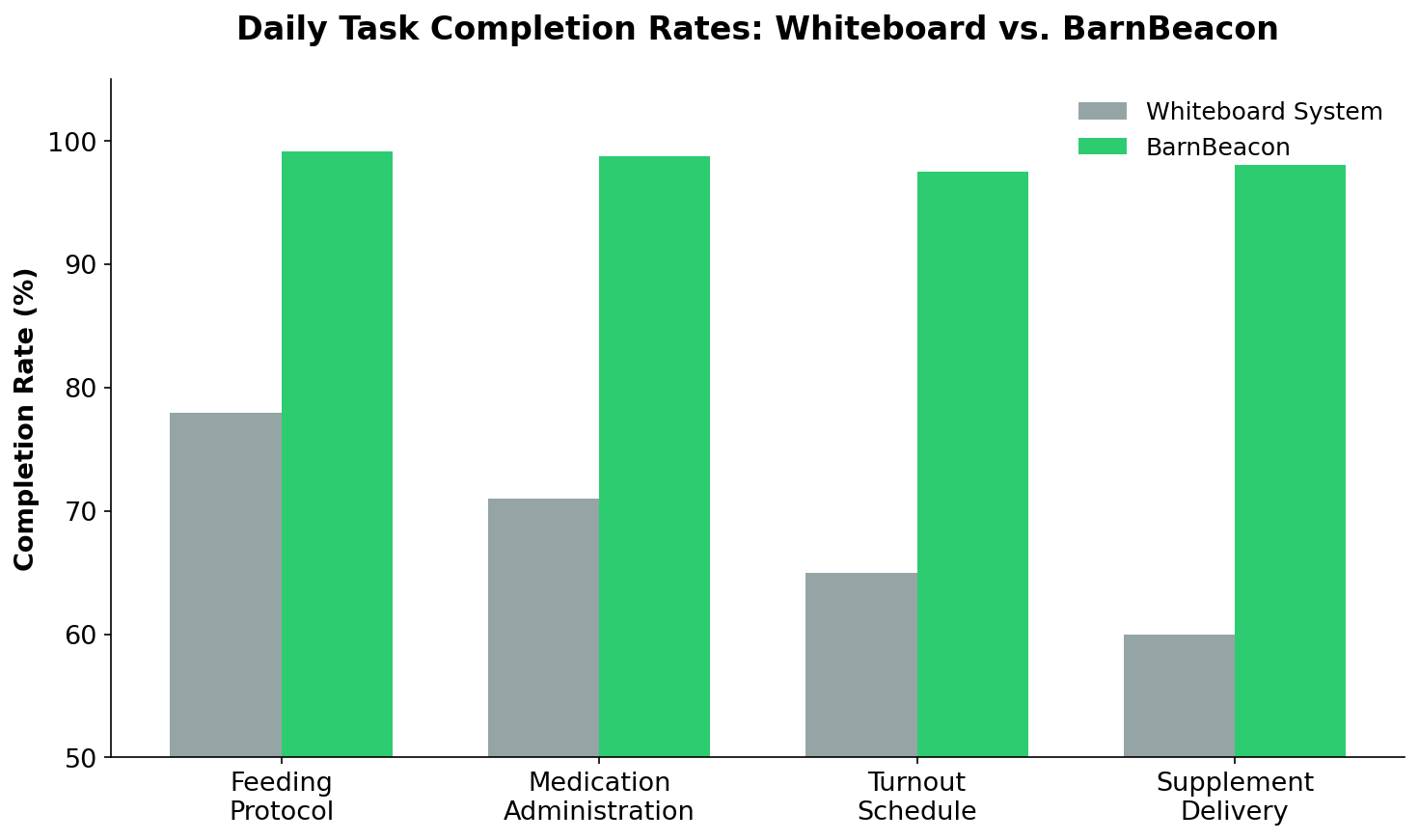
LOS ANGELES — Running a horse barn is a demanding, year-round operation where consistency and attention to detail directly affect animal welfare. From feeding schedules and medications to turnout routines and health observations, daily barn management involves hundreds of tasks that must be completed accurately every day. Yet many equestrian facilities have historically relied on whiteboards, handwritten notes, and group text messages to coordinate their staff and track daily responsibilities.
Across thousands of barns, a familiar routine has long played out each morning. Barn managers arrive early, review whiteboards filled with abbreviations and dry-erase notes, and attempt to reconstruct what occurred during the previous shift. Questions about medications, feeding completion, turnout schedules, or unusual horse behavior often require multiple calls or messages to staff members before answers are confirmed.
BarnBeacon, available at https://barnbeacon.com, is a platform designed to replace those manual systems with a structured digital workflow. More than 200 barns have already adopted the platform to manage daily operations, staff coordination, and horse care documentation.
BarnBeacon organizes each shift as a structured and trackable event. When staff members begin their shift, they log into the system and receive a prioritized task list tailored to their role, the current shift, and the specific horses they are responsible for. Tasks such as feeding, medications, supplements, turnout schedules, and blanketing adjustments are presented in order of priority.
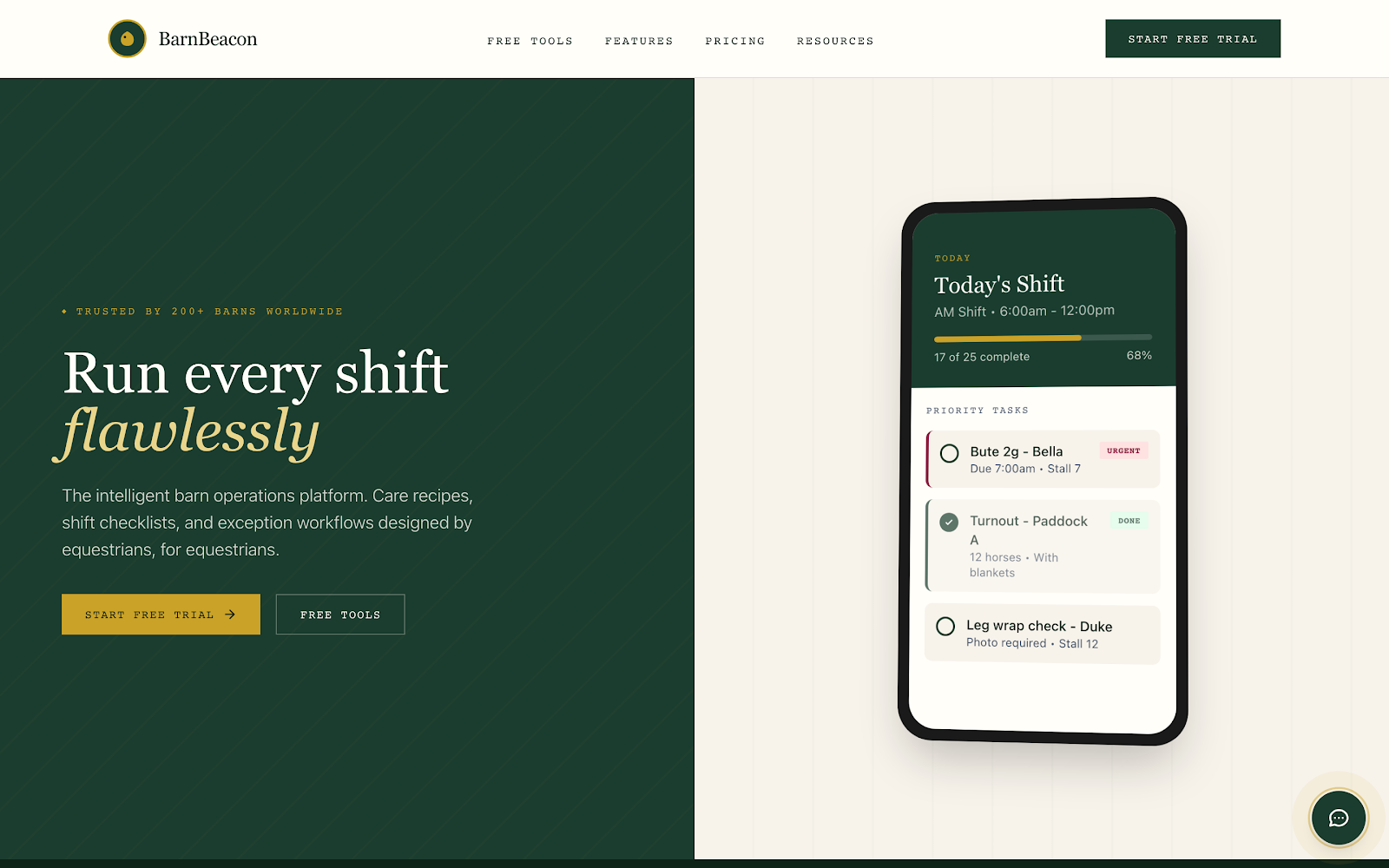
As tasks are completed, they are checked off with timestamps, creating a clear record of work performed during the shift. If a task is missed or skipped, the barn manager receives a notification immediately, allowing issues to be addressed while there is still time to correct them.
One of the most widely used features on the platform is its Care Recipes system. Each horse in the barn can be assigned a detailed care protocol outlining the exact feed type and quantity, supplement brands and dosages, medication timing, turnout schedules with weather exceptions, blanketing rules based on temperature ranges, and any special handling instructions.
These protocols are defined once by the barn manager or owner and then delivered consistently to every staff member on every shift. This ensures that new hires and experienced staff members follow the same standardized instructions, helping maintain consistent care regardless of who is working.
“I used to spend my first two hours every day calling staff and checking on things,” said one barn manager in Virginia who adopted the platform early. “Now I open the app for 30 seconds, see that everything was completed on the overnight shift, and I can start my actual work. That’s two hours of my life I got back every single day.”
The platform also addresses communication between barns and horse owners. In many facilities, updates about a horse’s daily care depend on staff members remembering to send messages, something that often becomes difficult during busy barn schedules.
BarnBeacon generates automated daily or weekly owner digests that summarize each horse’s care activities, notes from staff, and relevant updates. This allows horse owners to stay informed about their horse’s routine without requiring additional communication tasks from barn employees.
Barn staff can also record observations using voice and photo logging directly from the barn aisle. If a horse shows signs of discomfort or develops a minor injury, staff members can log voice notes or attach photos to the horse’s record, automatically creating a timestamped entry for future reference or veterinary consultation.
“Barns are high-stakes operations running on low-tech systems,” said founder Sarah Kincaid. “We’re talking about the health and safety of thousand-pound animals being managed with whiteboards and text messages. BarnBeacon brings the reliability and accountability that these animals deserve and that barn owners have been asking for.”
The company also provides free utilities for the equestrian community at https://barnbeacon.com/tools. These tools include feed calculators, turnout schedule builders, medication tracking templates, and barn staffing planners that can be used without creating an account.
In addition, the platform includes a feed reference library available at https://barnbeacon.com/feed, which contains nutritional profiles, feeding recommendations, and supplement compatibility information for many major equine feed brands.
BarnBeacon serves a wide range of equestrian facilities including boarding barns, training operations, breeding farms, lesson programs, polo operations, therapy horse programs, and equestrian centers worldwide.
More information about the platform is available at https://barnbeacon.com.
About BarnBeacon
BarnBeacon is a barn shift management and equestrian operations platform designed to help horse barns coordinate staff, standardize horse care protocols, and track daily tasks in real time. The system replaces traditional whiteboards and manual records with a structured digital workflow, allowing barns to maintain consistent care, improve accountability, and simplify communication with horse owners. Learn more at https://barnbeacon.com.
The post More Than 200 Horse Barns Replace Whiteboards With BarnBeacon Operations Platform appeared first on Pk Weekly.